
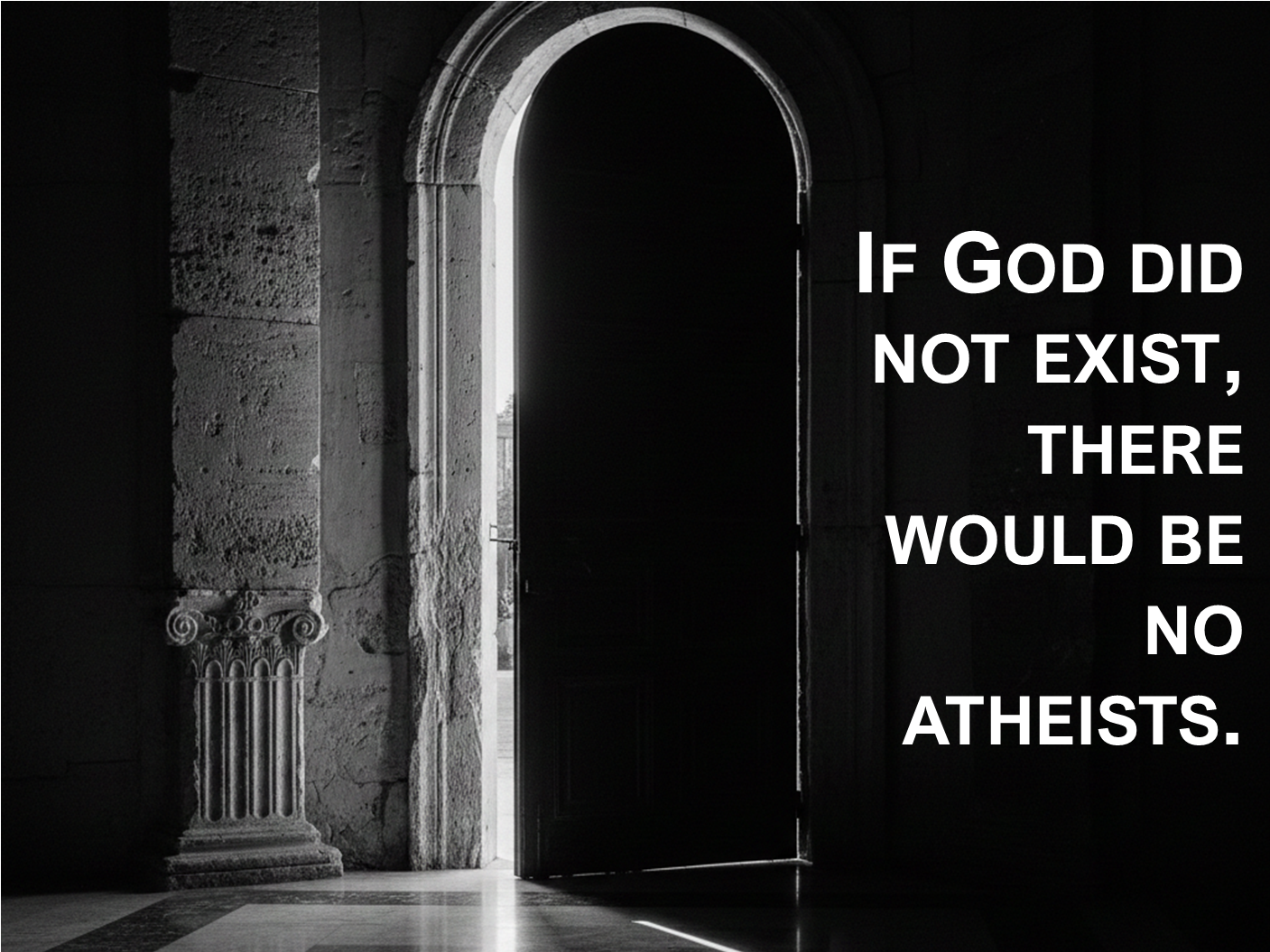
If God did not exist, there would be no atheists.
In the realms of logic and philosophy, we often encounter paradoxes that reveal far more than they intend. The assertion that the absence of the Divine would eliminate the very category of the atheist serves as a profound reminder: our most fervent convictions—even those rooted in negation—are inextricably bound to that which we choose to confront.
Throughout the arduous pursuit of self-improvement, I have come to realise that the dialogue between the sacred and the profane is precisely what keeps the gears of human inquiry in motion. To deny a thing requires that ‘thing’ to first occupy a space within the intellect; thus, the very existence of doubt, or indeed outright denial, acts as a testament to the idea’s enduring persistence.
Reason and faith, even in their most violent collisions, ultimately serve to define one another’s contours.
Se Deus não existisse, não haveria ateus
No mundo da lógica e da filosofia, muitas vezes nos deparamos com paradoxos que revelam mais do que pretendem. A afirmação de que a ausência de Deus eliminaria a própria categoria dos ateus é um lembrete de que nossas convicções mais fortes — mesmo as negativas — estão intrinsecamente ligadas àquilo que decidimos confrontar.
Ao longo da luta pelo aperfeiçoamento pessoal, percebi que o diálogo entre o sagrado e o profano é o que mantém as engrenagens da busca humana em movimento. Negar algo requer que esse “algo” ocupe um espaço na mente; portanto, a existência da dúvida ou da negação é, em si, um testemunho da persistência da ideia.
A razão e a fé, mesmo quando se chocam, acabam por definir os contornos uma da outra.